
ACE-031 1mg
A high-caution myostatin-pathway research entry for ActRIIB signaling and safety review.
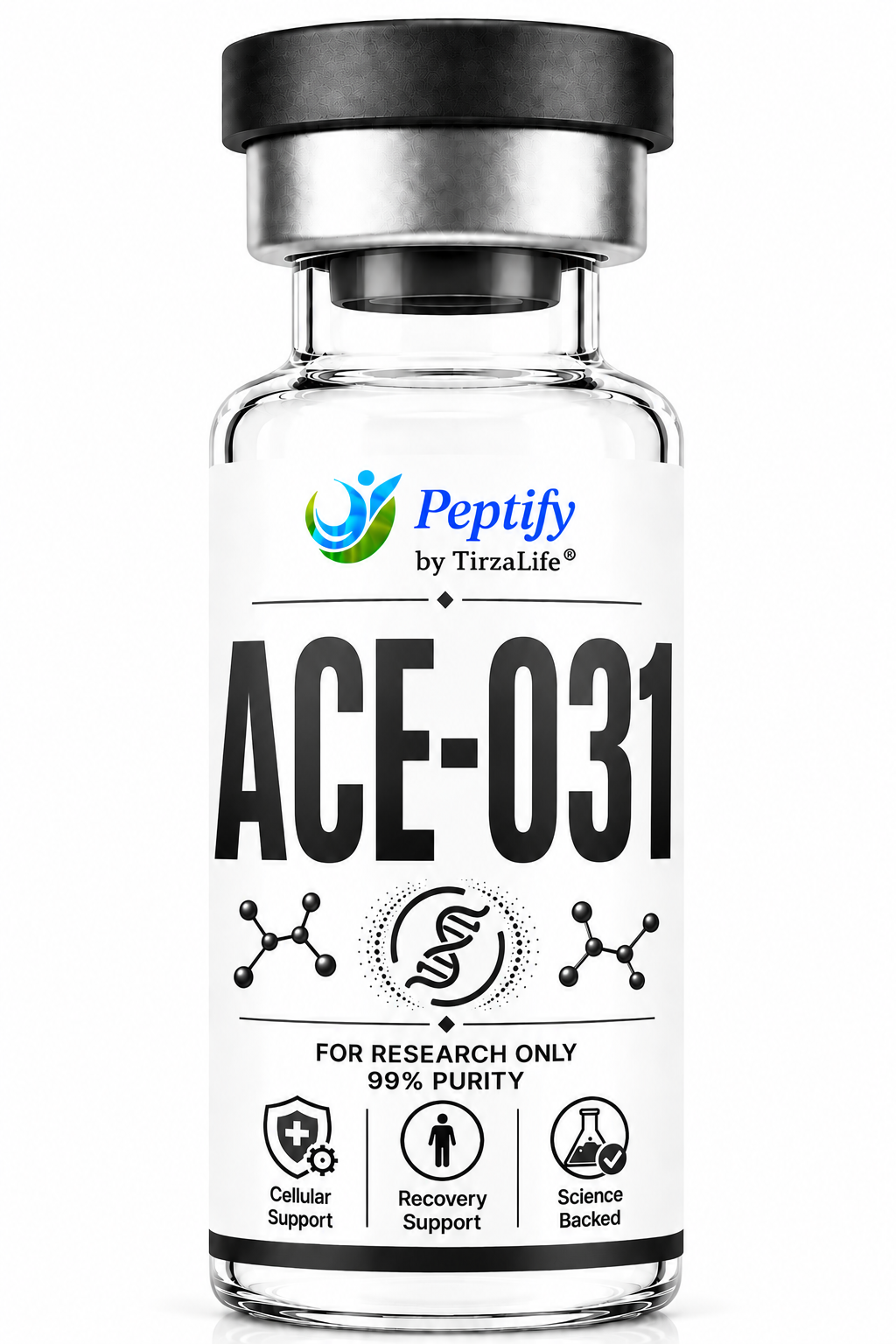
Contents
Use this guide as a structured review page. The same headings appear for every protocol so clients and the care team can scan the page consistently.
Quickstart Highlights
Reference-linked protocol details for ACE-031 1mg.
- Reference title: ACE-031 Dosing Protocols and Administration | Peptide Protocol Wiki
- Product: ACE-031 1mg vial
- A high-caution myostatin-pathway research entry for ActRIIB signaling and safety review.
- Source page: Open source
Protocol Overview
ACE-031 is a soluble activin receptor type IIB fusion-protein research product developed to modulate myostatin/activin signaling. Clinical development raised safety concerns such as bleeding-related and vascular findings, so this should be handled as high-caution research context only with cardiovascular, bleeding, cancer, and endocrine history reviewed by a clinician.
- Myostatin/activin pathway context
- High-caution safety review
- Bleeding and vascular-risk screening
- Clinician-guided discussion
Recommended Source
This protocol is linked to the workbook reference source below.
- ACE-031 Dosing Protocols and Administration | Peptide Protocol Wiki Open source
Dosing & Reconstitution Guide
Muscle growth and myostatin inhibition (discontinued investigational compound)
- Amount
- 1-3 mg/kg
- Frequency
- Every 2 weeks
- Duration
- 12 weeks (based on Phase 2 DMD protocol; trial was terminated early)
- Route
- Schedule
- Timing
- No specific time of day required; allow solution to reach room temperature before injection
- ✓ Rotate injection sites
- Repeatable
- Yes
- Storage: ACE-031 protein solutions should be stored at 2-8 degrees Celsius (refrigerated). Protect from freezing and agitation. Protein solutions are sensitive to repeated freeze-thaw cycles which can cause aggregation and loss of activity.
- CBC with differential
- When: Baseline
- Why: Baseline blood cell counts
- CMP (Comprehensive Metabolic Panel)
- Why: Liver and kidney function baseline
- DEXA scan
- Why: Baseline lean body mass and fat mass measurement
- Bone-specific alkaline phosphatase
- Why: Baseline bone formation marker
- Coagulation panel (PT/INR, aPTT)
- Why: Baseline vascular/bleeding risk given epistaxis concern
- When: 12 weeks
- Why: Assess lean mass and fat mass changes
- →Contraindication: Avoid in patients with bleeding disorders, vascular malformations, or hereditary hemorrhagic telangiectasia; discontinued due to vascular safety signals
Dosing Protocol
Free access to research-backed dosing information for all peptides.
| Parameter | Protocol |
|---|---|
| Starting dose | 1.0 mg/kg |
| Dose escalation | Up to 2.5 mg/kg |
| Route | Subcutaneous injection |
| Frequency | Every 2 weeks |
| Planned duration | 12 weeks (24 weeks with extension) |
| Actual duration | Terminated early by DSMB |
| Population | Boys with DMD, age 4 and older |
- 150+ peptide profiles · 30+ comparisons · 18 research tools
- Free access to complete dosing tables and protocol details.
- ACE-031 was supplied as a sterile solution for subcutaneous injection in clinical trials. As a discontinued investigational compound, no commercial formulation exists. Research-grade material requires verification of protein integrity, sterility, and endotoxin content before use.
- ✓Subcutaneous (abdomen)
- ✓Subcutaneous (thigh)
- ACE-031 protein solutions should be stored at 2-8 degrees Celsius (refrigerated). Protect from freezing and agitation. Protein solutions are sensitive to repeated freeze-thaw cycles which can cause aggregation and loss of activity.
- Compare these clinical doses with what 15+ community members report using.
- Based on 15+ community reports
- Review safety warnings and contraindications before starting any protocol.
- The Phase 1 study evaluated single subcutaneous doses of ACE-031 in healthy postmenopausal women using a dose-escalation design.
- Key pharmacodynamic findings from the Phase 1 study included dose-dependent increases in lean body mass measured by DEXA scan, with the most pronounced effects at 1.0 and 3.0 mg/kg. At the 3 mg/kg dose, mean lean body mass increased by approximately 1.0 kg compared to placebo within 29 days after a single injection. Fat mass showed trends toward reduction at the highest dose levels. Bone formation biomarkers (bone-specific alkaline phosphatase) increased at higher doses, suggesting anabolic bone effects.
- These single-dose results established the proof of concept for ACE-031's biological activity and informed the dose selection for the Phase 2 study.
- The Phase 2 study was designed as a randomized, double-blind, placebo-controlled trial in boys aged 4 and older with DMD.
- The study was terminated before completion due to the emergence of vascular adverse events at doses in the 1.0-2.5 mg/kg range administered biweekly. The DSMB's decision to halt the trial prevented determination of the full dose-response relationship and the maximum tolerated dose.
- The every-2-week dosing schedule was selected based on the estimated half-life of the ActRIIB-Fc fusion protein of approximately 10-15 days. This dosing interval was designed to maintain continuous suppression of circulating myostatin and activin levels throughout the treatment period.
- The Phase 1 data demonstrated a clear dose-response relationship for lean body mass effects. The threshold dose for detectable lean mass changes appeared to be in the 0.3-1.0 mg/kg range. The 3.0 mg/kg dose produced the largest effects but was evaluated only as a single dose. Whether repeated dosing at this level would have produced proportionally greater lean mass gains or would have reached a plateau is unknown. The relationship between dose, lean mass changes, and vascular toxicity risk is important: it is not known whether there exists a therapeutic window where muscle effects are achieved without unacceptable vascular risk.
- ACE-031 was administered by subcutaneous injection in clinical trials. The relatively large volume required for body-weight-based dosing of a protein solution may necessitate multiple injection sites for higher doses.
- Administration considerations:
- Calculate dose based on body weight (mg/kg)
- Determine injection volume based on the protein concentration of the formulation
- For volumes exceeding 1.5-2 mL, divide across multiple injection sites
- Rotate injection sites with each administration
- Monitor injection sites for local reactions
- The abdomen (avoiding the umbilical region) and anterior thigh were the primary subcutaneous injection sites used in clinical trials. Sites should be rotated with each biweekly administration to minimize local tissue reactions and ensure consistent absorption.
- As a recombinant protein, ACE-031 requires careful handling to maintain structural integrity and biological activity. Store at 2-8 degrees Celsius (standard refrigerator temperature) in the original container. Do not freeze, as ice crystal formation can denature the protein and promote aggregation. Do not shake or agitate, as mechanical stress can cause protein unfolding at air-liquid interfaces. Protect from light. Allow the product to equilibrate to room temperature before injection. Inspect visually before use; do not use if solution is cloudy, discolored, or contains visible particles.
- In clinical trials, monitoring parameters included lean body mass and fat mass by DEXA scan, bone mineral density and bone biomarkers, serum myostatin and activin levels (pharmacodynamic markers), physical examination for vascular abnormalities (telangiectasias), monitoring for epistaxis and mucosal bleeding, muscle strength testing (in DMD study), and standard safety laboratory assessments.
- ACE-031 overview and research guide
- ACE-031 side effects profile
- ACE-031 research evidence
- Research-grade suppliers verified by our scoring methodology.
- Free access to verified vendor scores, pricing, and suppliers.
- Get notified when we update dosing protocols or publish related comparisons.
Important Note
This page is informational and does not authorize use. Peptify clients should complete assessment, disclose medications and health history, and follow the clinician-approved plan only.
- Do not start, stop, combine, or change a protocol based only on website content.
- Emergency symptoms require urgent medical care, not a website or routine follow-up message.
How This Works
Research protocols for ACE-031 typically use 0.02 to 3.0 mg/kg subcutaneous injection administered Single dose for Single administration with follow-up monitoring. Dose-dependent lean body mass increases observed at 1 and 3 mg/kg; highest dose (3 mg/kg) produced approximately 1 kg lean mass increase. Alternative protocols may use different doses depending on the research objective. No FDA-approved human dosing exists.
- ACE-031 is typically administered via the following routes: Subcutaneous (abdomen), Subcutaneous (thigh). The choice of administration site may depend on the research protocol and study objectives. Always follow established research protocols.
- ACE-031 was supplied as a sterile solution for subcutaneous injection in clinical trials. As a discontinued investigational compound, no commercial formulation exists. Research-grade material requires verification of protein integrity, sterility, and endotoxin content before use.
- ACE-031 protein solutions should be stored at 2-8 degrees Celsius (refrigerated). Protect from freezing and agitation. Protein solutions are sensitive to repeated freeze-thaw cycles which can cause aggregation and loss of activity.
- Typical research protocols for ACE-031 use a cycle duration of 12 weeks (based on Phase 2 DMD protocol; trial was terminated early). Cycles may be repeated based on research objectives.
- Pre-filled reconstitution and dose math for ACE-031
- Plan multi-peptide calendars with vial tracking
References
Reference source used for this protocol page.
- ACE-031 Dosing Protocols and Administration | Peptide Protocol Wiki Open source
- Peptify Reconstitution Guide